
Nanda Devi Raj Jat Yatra
Nanda Devi Raj Jat is a three-week-long hindu festival and Kurur in nandanagar tehsil in chamoli to Homkund yatra (pilgrimage) organised once every 12 years in Chamoli District of Garhwal region of Uttarakhand state in India, involving a challenging trek covering around 280–290 km, with daily halts at various villages and high-altitude sites, culminating in religious ceremonies at Homkund. It begins at the Nanda Devi Siddhpith temple at Kurur village near Nandprayag, procceds via two way.There are two devoties of nanda devi. First devoties called kurur'Nanda (dasauli'Nanda) and second Bandhan'Nanda. First way is from kurur to kumjug , luntara, latukhal, kandai dasoli, bairashkund, matai, pahana, leani ramani, Aala, Kamol, Wan, Bedni Bugyal, Pathar Nachauni, Bhagwabasa,Trishuli, Roopkund, Shila Samudra, to Homkund with a four horned sheep (called Chausingya-Meda in Garhwali dialect) which is sat free at the end with adornments, food and clothing, and other offerings. Second way is from kurur to ustoli, bhenti, bangali, dungari, tharali , nandkesari etc. two way of rajjat meet in center Wan village.of Future Nanda Devi Raj Jat pilgrimages are scheduled in 2026, 2038, 2050, 2062, etc.
1/16/20263 min read
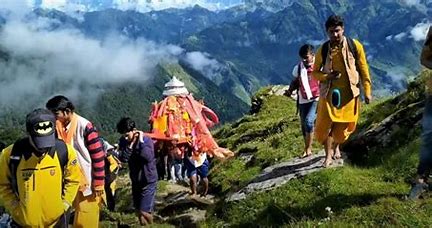
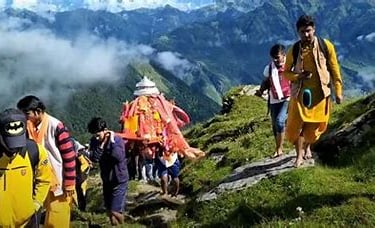
The Nanda Devi Raj Jat Yatra is not just a trek. it is one of the most spiritually powerful journeys in India. Held once every twelve years, this legendary pilgrimage in Uttarakhand is an amalgamation of faith, folklore, endurance, and breathtaking Himalayan landscapes. Often called the “Himalayan Mahakumbh,” the 2026 Yatra will draw thousands of devotees, trekkers, and cultural travellers from across the country and beyond.
What Is the Nanda Devi Raj Jat Yatra?
This journey honours Goddess Nanda Devi, the daughter of the Himalayas and Lord Shiva’s divine consort. According to belief, the goddess begins a ceremonial farewell journey from her maternal home in Nauti village to her husband’s abode in the high Himalayas once every twelve years. This sacred procession symbolises devotion, separation, and spiritual surrender. The Yatra covers around 280–290 kilometres on foot and usually lasts close to three weeks. The route takes you through hidden villages, thick forests, open meadows, roaring rivers, and up into the thin air of the mountains.
Why the Yatra Is Spiritually Important
For the people living in Uttarakhand, it’s more than a festival. Families have joined, generation after generation. Every stop along the way turns into a celebration—rituals, folk songs, prayers, laughter. Leading everything is the four-horned Chausingha Khadu, believed to carry the goddess’s spirit. Where it pauses, ceremonies begin. Every halt becomes a sacred space. The journey is tough. It tests faith, patience, and humility. Those who finish often say the experience marks them for life—spiritually and emotionally.
Key Facts About Nanda Devi Raj Jat Yatra 2026
Event cycle: Once every 12 years
Starting point: Nauti village, near Karnaprayag
Ending point: Homkund, near Roopkund
Total distance: Around 280–290 km
Duration: About 19–22 days
Difficulty level: Moderate to tough
Highest altitude: Over 4,000 metres
Expected to take place: August-September 2026
Nanda Devi is a manifestation of goddess Parvati, consort of Lord Shiva, she is also referred to as Gori Devi, Gora, Gauri, etc very commonly and interchangeably. The Yatra signifies the journey of the newly wed Nanda Devi from her maternal home in Garhwal to go to scared Mount Kailash, which is the abode of her consort Lord Shiva, from which she returns to her maternal home in Garhwal every year as annual journey in August September month, and then after 3 weeks of celebrations she goes back to Kailash. According to the local Garhwali tradition, Goddess Nanda is presented with lots of gifts by the people of her maternal Garhwali region before she returns to Mount Kailash. During her visit to Garhwal of deities from neighbouring areas, including from Garhwal, pay her a visit, and she her visits a number of temples too. On the Nanda Devi Raj Jat, the Goddess Nanda Devi visits the temple dedicated to her Dharam-Bhai (godbrother by the virtue of duty), called Laatu Devta, which is the situated in latukhaal temple in nandanagar and also last temple in the last village van of the yatra. The whole area which is covered during the yatra is divided in two parts, the initial one being the Mait (homecoming of Goddess Nanda Devi from Mount Kailash to the maternal home in Garhwal) and the later half being Sauraas (her return to in-laws or husband's abode at Mount Kailash). The people of the Mait region tend to get very emotional during this Yatra, as if sending off their own daughter to her Sauraas.
How to Prepare for the Yatra
You need to prepare your body. Give yourself at least three or four months. Start walking, add light treks, and build up your stamina. The distance and altitude will test you. Pack smart. Carry warm clothes, rain protection, sturdy trekking shoes, a water bottle, basic medicines, energy snacks, a torch, and a sleeping bag. Since the Yatra happens during the monsoon, don’t forget good rain protection.
Accommodation and Food
Accommodation during the Yatra is basic. Pilgrims sleep in community tents, village homes, or shared shelters. Meals are simple—dal, rice, roti, tea—usually cooked by volunteers. If you want more comfort and structure, managed camps are a good option. These are run by experienced organisers and usually include meals, guides, medical support, and logistics.
Travel News - Find latest news and tips based on Indian and World travel including top 10 travel destination, tourism information, how to reach visit and more at Times Now.
Prasthan travels And Events Pvt Ltd
Lets Explore The world Together
© 2026. All rights reserved.